The Trumpization of the World Cup is progressing.
Krytyka Polityczna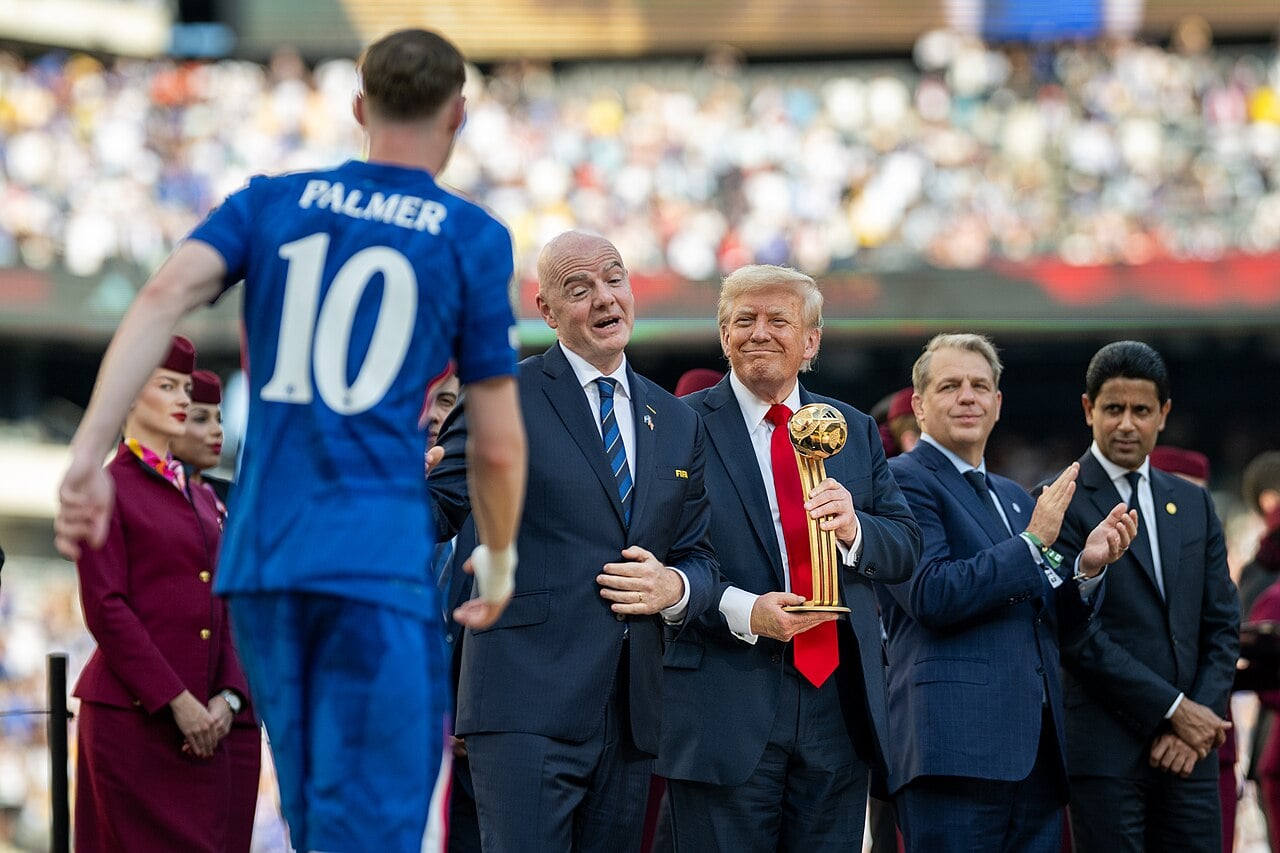
This is favored by FIFA's policy, which since Trump's victory has redirected all its attention to lobbying organizations associated with the Republicans. The post "Trumpization of the World Cup" first appeared on Krytyka Polityczna.
When in 2018 FIFA made the decision to organize the World Cup in football in Canada, Mexico, and the USA, few suspected that it would become controversial from a political standpoint. After all, that same year the World Cup was held in Russia, which four years earlier annexed Crimea and attacked Donbas with "little green men." Four years after the tournament over the Volga, the organization was taken up by Qatar, which is an absolute monarchy that ruthlessly exploited cheap migrant labor from Africa and poorer parts of Asia. The World Cup organized in 2026 by two "strongholds of democracy" on the Western Hemisphere was supposed to be a pleasant change from competitions located in authoritarian regimes.
Illegal fans
In 2018, Donald Trump was also in charge of the USA. However, his first term was much less belligerent than the second; compared to his current antics, he was quite docile. Since January 2025, the White House has become expansionist, overly assertive, and aggressive, and the effects of these actions have also infected the great football celebration. Worse still, in Trump's second term, the United States targeted their neighbors as the primary focus. Instead of celebrating friendship among the three largest countries of North and Central America, animosities and disputes appeared between them during the World Cup year. In other words, the World Cup was trumped.
Already in 2025, hosting the event by the USA became at least problematic. The ruthless (anti)migration policy of Washington led to tragedies for many people, who were forcibly sent back to their countries. Stricter entry criteria to the USA also affected many tourists, who were turned back at the border for trivial reasons forcibly turned away at the border. As a result, Human Rights Watch sent a letter to FIFA, urging consideration of changing the host country, as the current policies of the White House could threaten the safety of fans arriving at the Potomac.
In theory, American border services could even turn away players. This is not mere speculation – in March of this year, players from Jamaica's Mount Pleasant club, originating from Haiti, were not allowed into the CONCACAF Champions Cup round of 16 match (the North and Central American equivalent of UEFA) against LA Galaxy. Haiti is on the list of 19 countries subject to the strictest immigration restrictions. However, it so happened that the country qualified for this year's World Cup, and will play its group matches in the USA – in New York, Atlanta, and Boston. Not all team members play in European leagues and have passports that would allow them to enter the US without concern.
Even if player entry is not an issue, there could still be considerable chaos at the borders if customs services do not hold back. According to FIFA, as many as 7 million fans will participate in the event, so there could be quite a few cases of being turned away. Besides Haiti, Iran, Iraq, the Democratic Republic of Congo, Ivory Coast, and South Africa will also participate, with whom Trump also has issues. In the age of social media and mobile devices, some of these incidents could go viral, discrediting not only the main organizer but the entire event. Nevertheless, FIFA took the assurances from the USA that the country's immigration laws do not threaten the smooth organization of the tournament at face value.
Cities versus Trump
Earlier this year, the USA experienced a traditional public finance crisis, namely disputes in Congress over raising the debt ceiling, which annually lead to temporary government shutdowns. The host cities began to fear that this could disrupt organizational efforts – after all, many government agencies, such as the Federal Aviation Administration, are responsible for the event. However, Congressmen reached an agreement with the government – as they do every year – and the threat of a shutdown was averted.
But the cities' concerns did not disappear. No wonder – the centers hosting players and fans were supposed to receive hundreds of millions of dollars in federal grants, including one hundred million to lower public transportation costs so that the expenses of travel would not discourage fans from less affluent countries. The Federal Emergency Management Agency plans to allocate $626 million to cover security costs. This is especially important given the increased terrorist threat in the US related both to the war in Iran and the nearby drug cartel conflicts with the Mexican government.
The internal political dispute in the USA is so heated that even funds for fundamental needs – such as ensuring security – are uncertain. Matches will be played in the largest American cities, most of which are governed by Democrats. Some will also take place in traditionally "blue" states.
Host cities are wary of Washington's politics. In Los Angeles, stadium workers, where the US national team will play among others, threatened to strike over the planned presence of the infamous Immigration and Customs Enforcement (ICE) during the event, which could be a reason to withdraw federal financial support.
It might seem that in Texas such disputes should not occur, but it was in Houston that Governor Greg Abbott threatened to withdraw security funds if the city did not resolve its conflict with ICE. During the event, tensions could reach a boiling point, especially if officers start checking fans they deem suspicious. Locals might defend them, and such protests have already led to tragedy twice – namely the shooting of two American citizens by ICE.
High-risk team
Another problem is related to the war in Iran. A lasting peace seems unlikely – Trump has firmly rejected the proposal for a ceasefire from Tehran. Iran will play its matches in Los Angeles (twice) and Seattle. The US team will also play in these same locations. On June 13 at SoFi Stadium in Los Angeles, the Americans will face Paraguay, and just three days later, Iran will play New Zealand. Naturally, fans of both teams will meet, which could lead to tensions – especially since football matches are highly emotional. Even if the USA does not allow Iranian fans in, there is a large Persian minority living in the US and Canada. In Washington state alone, there are tens of thousands of Iranian Americans, and the largest community is in Los Angeles.
The Iranian minority in the USA generally opposes the regime of the ayatollahs, but many also oppose the bombings of their homeland, as well as the genocide in the Gaza Strip, carried out with the difficult-to-overstate support of the United States. Fortunately, during this World Cup's group stage, Iran will not play against the USA, as it did in 1998 in France. That match was called the most political game in football history. However, Iran's game against Egypt, which is currently an ally of the USA, will also be politically charged – especially if the situation in the Middle East does not calm down by then.
Donald Trump stated that Iran's participation would be "inappropriate." In response, Iran proposed excluding the USA. Both proposals were categorically rejected by FIFA. Tehran then suggested moving its national team's matches outside the United States, which was also not accepted. Hardly any other way – last-minute organizational changes could cause even greater chaos.
Childish Gianni
The World Cup in three CONCACAF countries has been heavily Americanized from the start. The USA dominates among the host cities, with only three each in Canada and Mexico. Moreover, from the quarterfinals onward, all matches will be played exclusively along the Mississippi River. Canada and Mexico, even before Trump came to power, could thus feel like second-class organizers.
Trump's policy, which aims to turn the World Cup not into a joint celebration of three American countries but into a display of US hegemony, has only intensified these feelings. Since the beginning of his second term, Trump has strengthened his relations with FIFA President Gianni Infantino, who has used this to elevate his own political position. To flatter the president, he even proposed creating a FIFA Peace Prize, with the first laureate to be Trump himself. It’s hard to imagine a greater embarrassment, although FIFA's president has many on his record – as does the entire organization he controls.
“The original concept of the World Cup highlighted the strength and attractiveness of Canada, Mexico, and the United States as co-hosts. This thread has disappeared in most of the marketing materials and reports so far, with the lion's share of attention focused on the United States,” – said John Krick, executive director of the United Bid Committee 2026, to “Politico”.
Trump's influence on the World Cup thus leads to disputes among the tournament's hosts. Moreover, it poisons the atmosphere within the United States itself, as Democrats have decided to jump on this bandwagon and increasingly express skepticism about the high costs of organizing the event, even though they supported it under Biden. FIFA's policies, which since Trump's victory have shifted their focus to lobbying organizations associated with Republicans, facilitate this.
The high prices of airline tickets, caused among other things by the blockade of the Strait of Hormuz, and the tense atmosphere discourage fans from participating in the event. According to a report by the American Hotel & Lodging Association, 80% of hoteliers in the USA report fewer reservations than expected. The costs that host cities will incur are estimated at 100-200 million dollars, but the prospect of hosting even 5 million guests in the USA alone was tempting. It may turn out that costs will outweigh benefits, and American city officials will partly have Trump to thank for that.
The post Trumpization of the World Cup continues first appeared on Krytyka Polityczna.